Pomeranian Grooming Guide: Coat, Nails, Teeth & Bathing
A Pomeranian’s full double coat is beautiful, but it needs a consistent routine. Grooming is not only cosmetic: regular brushing, nail care, dental attention, and skin checks help you notice small changes early and make professional appointments easier.
Understand the Pomeranian double coat
Pomeranians have a dense undercoat beneath a longer outer coat. Loose hair can collect close to the skin, especially behind the ears, under the legs, around the collar area, and near the tail. Gentle brushing all the way through the coat helps prevent tangles and matting.
Build a brushing routine
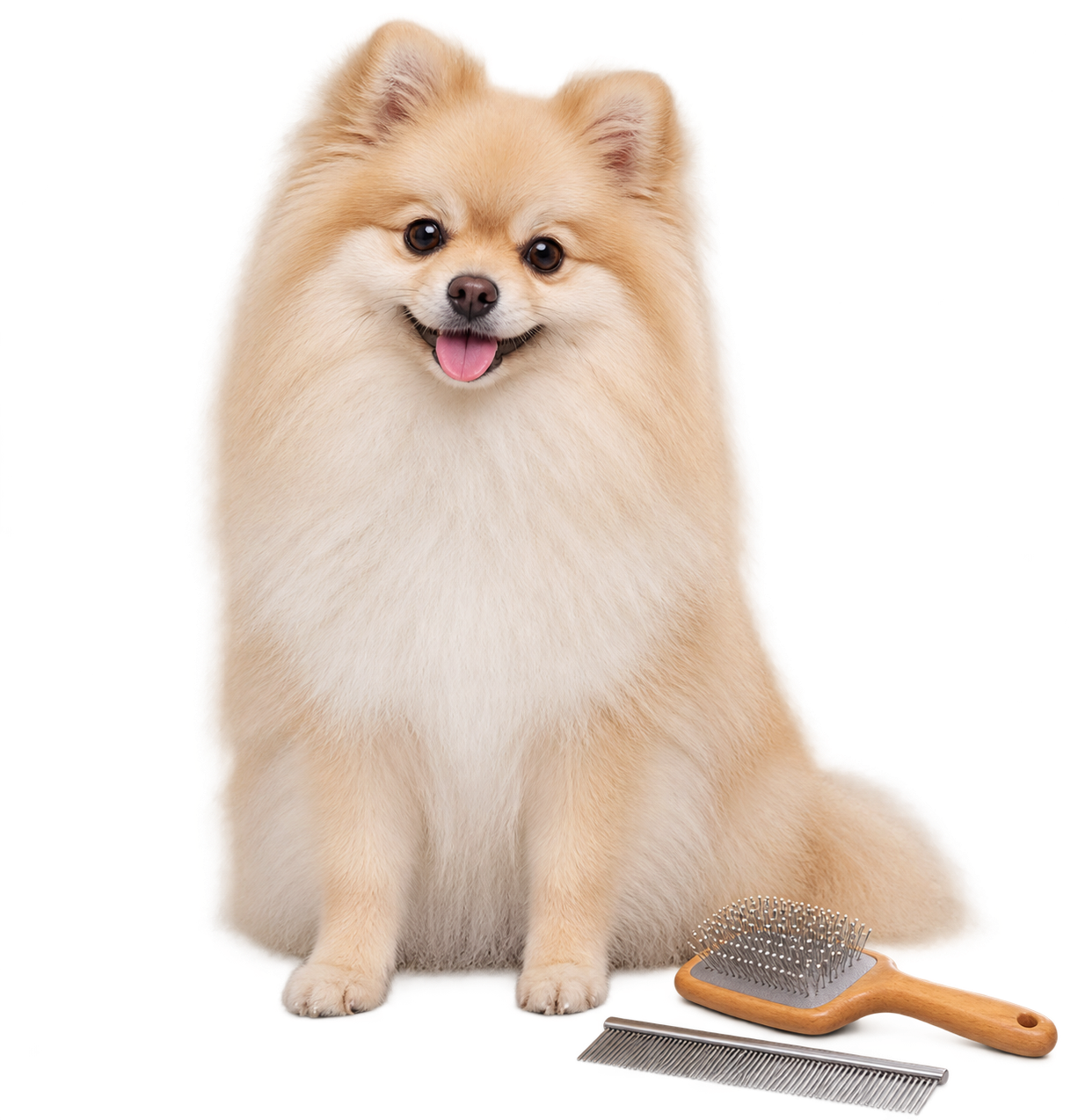
The American Kennel Club recommends brushing a Pomeranian down to the skin about once a week, with more attention when shedding or when tangles develop quickly. Work in small sections with a pin brush and slicker brush, then use a comb to check your work. Never yank through a knot or scrape the skin.
Choose useful grooming tools
- A quality pin brush for section-by-section brushing
- A small slicker brush used with a light hand
- A stainless-steel comb for checking hidden tangles
- Dog-safe shampoo and conditioner
- Nail clippers or a grinder sized for a toy breed
- A dog toothbrush and veterinarian-approved toothpaste
- Soft towels and a non-slip bathing surface
Bathing your Pomeranian
Bathing frequency depends on coat condition, activity, and veterinary advice. Brush out tangles before the bath, use lukewarm water, rinse products thoroughly, and dry the dense coat carefully. Leaving the undercoat damp can cause discomfort and skin problems. A professional groomer can demonstrate safe drying and coat-care techniques.
Schedule professional grooming when needed
The AKC suggests a complete professional groom every four to six weeks for owners who are not comfortable managing the full routine at home. Discuss brushing, bathing, nails, ears, and sanitary care with the groomer. Avoid shaving the double coat unless a veterinarian recommends it for a medical reason.
Keep nails short and paws comfortable
Long nails can affect comfort and movement. Check them regularly and trim small amounts at a time, or ask a groomer or veterinarian for help. Examine paw pads for irritation, debris, or excessive hair that reduces traction on smooth floors.
Make dental care part of grooming
Small dogs can be prone to dental problems, so begin gentle tooth brushing early. Use only toothpaste made for dogs. Ask your veterinarian how often to brush, which dental products are appropriate, and when professional cleaning may be needed.
Check ears, eyes, and skin
During grooming, look for redness, odor, discharge, flakes, sores, parasites, sudden hair loss, or sensitivity. Do not insert cotton swabs or unapproved products into the ear canal. Contact your veterinarian if something looks or smells unusual or if your puppy appears uncomfortable.
Teach a puppy to enjoy handling
Start with very short sessions when your puppy is calm. Reward gentle handling of paws, ears, the mouth, and coat. Stop before frustration builds. Frequent positive practice is more effective than waiting until a long grooming session becomes unavoidable.
Find your Pomeranian companion
Good coat care begins with preparation and a routine your puppy can trust. Browse our available Pomeranian puppies, learn more about Dream Poms, or contact us at +1 (917) 297-8682 with puppy-care questions.