
Bringing Home a Pomeranian Puppy: Your First-Week Checklist
Your Pomeranian puppy’s first week should feel calm, safe, and predictable. Preparing before pickup helps you focus on bonding instead of searching for supplies at the last minute. Use this checklist to create a gentle start, then follow the individualized guidance from your breeder and veterinarian.
Prepare a small, safe home base
Choose a quiet area where your puppy can sleep, eat, and relax near the family. A correctly sized crate, pen, or gated room can limit overwhelming exploration and make supervision easier. Remove electrical cords, small objects, unsafe plants, medications, cleaners, and anything a curious puppy could swallow.
Gather the essentials before pickup
- The same food the puppy is currently eating
- Small food and water bowls
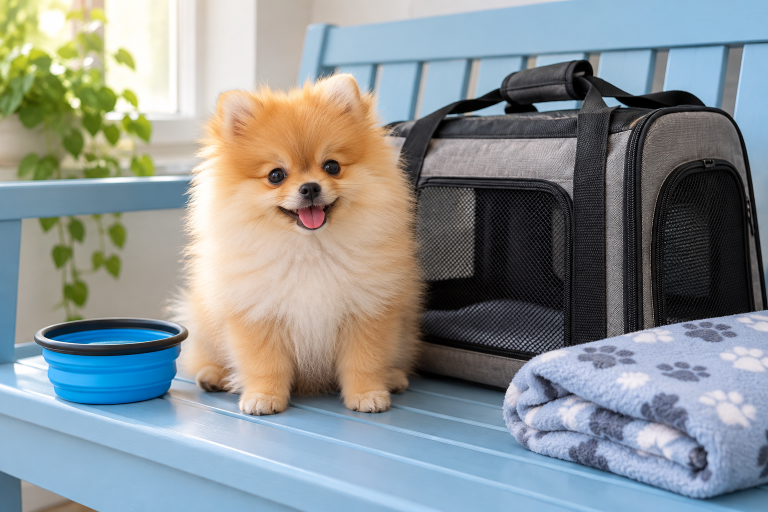
- A secure carrier for travel
- A lightweight harness and leash
- An identification tag
- A comfortable bed and washable blankets
- Toy-breed-safe chew and enrichment toys
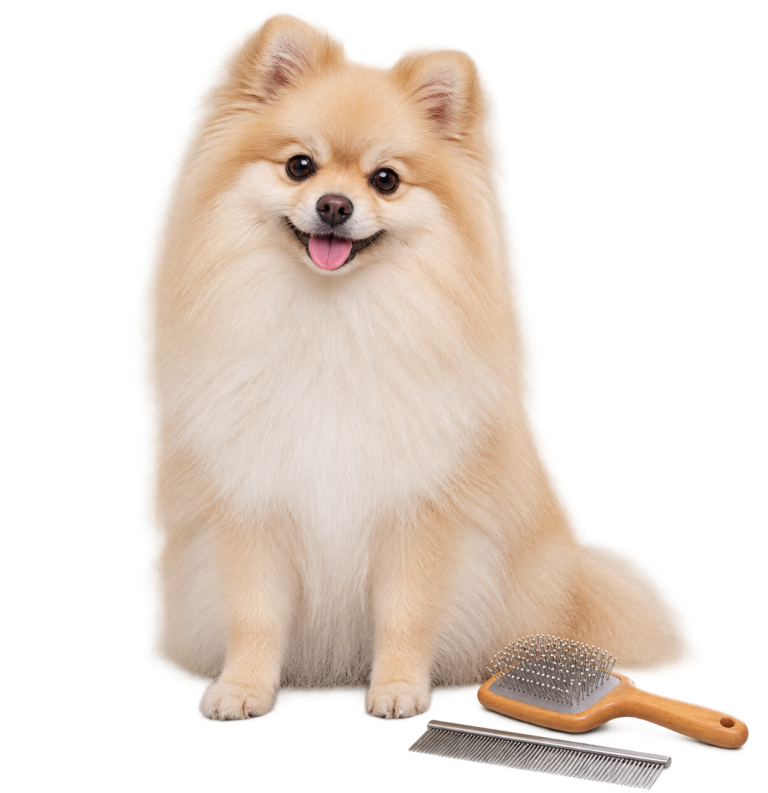
- A pin brush, comb, toothbrush, and nail-care supplies
- Enzymatic cleaner and potty-training supplies
Keep the first day quiet
Give your puppy time to observe and explore one supervised area. Avoid a crowded welcome party, constant handling, or immediate trips to busy places. Show the puppy the potty area, offer water, follow the established feeding schedule, and allow plenty of rest.
Follow the familiar feeding routine
Ask for the puppy’s current food, portion, and meal schedule. Keep that routine during the transition unless your veterinarian recommends otherwise. If you later change food, make the transition gradually. Contact a veterinarian promptly if a small puppy refuses food, becomes unusually weak, repeatedly vomits, or develops persistent diarrhea.
Begin a predictable potty schedule
Take the puppy to the chosen potty place after waking, eating, drinking, playing, and before bedtime. Praise success immediately and clean accidents without punishment. A consistent schedule and close supervision are more effective than expecting a young puppy to signal reliably.
Arrange a veterinary visit
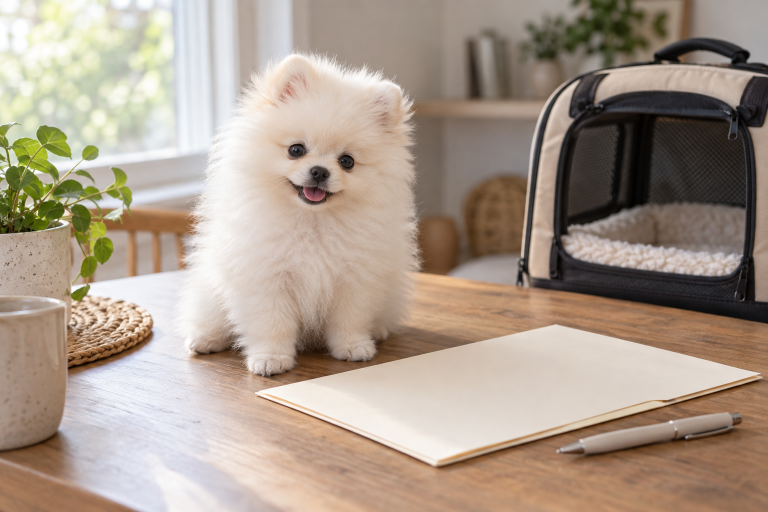
Schedule a new-puppy exam and bring all health records. Your veterinarian can review vaccinations, parasite prevention, nutrition, dental care, microchipping, and safe socialization. Ask where to go after hours and which symptoms require urgent care.
Introduce people, pets, and rooms gradually
Keep introductions short and positive. Supervise children closely and teach them to sit on the floor, use gentle hands, and never carry the puppy without adult help. Introduce resident pets through controlled, calm sessions and give each animal separate food, rest, and retreat spaces.
Start simple training and grooming
Use brief, reward-based sessions to teach the puppy’s name, attention, recall, and calm handling. Gently touch paws, ears, and the mouth, and introduce a soft brush without forcing a long grooming session. End while the experience is still positive.
Expect an adjustment period
Some puppies settle quickly; others need more time. Keep meals, potty breaks, play, and sleep consistent. Record questions as they arise and ask for help early rather than waiting for a small concern to become a larger problem.
Plan your puppy’s homecoming with Dream Poms
See our available Pomeranian puppies, review answers in our Pomeranian puppy FAQ, or contact Dream Poms at +1 (917) 297-8682 to discuss pickup and homecoming.